


A pragmatic, real-world approach to advancing climate action
At a glance
- Our 2026–2030 climate strategy: pragmatic, forward-looking and rooted in real-world impact, designed to capture opportunities created by the energy transition, manage climate-related risks across the portfolio, and expand our impact in accelerating real-world decarbonization.
- We have set a 2030 target of reaching $70 billion in Climate Transition Aligned (CTA) private assets by 2030, reflecting our focus on investing in Climate Solutions and accelerating credible Transition Planning where we have meaningful influence.
- Q&A with Anna Murray, Senior Managing Director and Global Head of Sustainable Investing, on what prompted the strategy refresh, how Climate Transition Aligned assets are defined, where the biggest opportunities lie, and why she is optimistic about the path ahead.
As a pension plan, we help deliver retirement security for generations of teachers. That inherently means thinking long-term and incorporating big picture enduring themes like climate change and the energy transition into how we invest and manage our portfolio. We have been committed to taking an active role in that regard, including through reducing emissions intensity through active work with the companies we own.
And we have made progress, having achieved our 2025 interim emissions intensity reduction target one year early at the end of 20241, representing an approximately 50 percent reduction from our 2019 baseline. This provided an appropriate moment to reflect on learnings, the current state of the energy transition, and opportunities to further leverage our role as an asset owner to expand our impact in mitigating the global challenge of climate change.
The result is our 2026–2030 climate strategy: pragmatic, forward-looking and rooted in real-world impact. The strategy is designed to capture opportunities created by the energy transition , manage climate-related risks across the portfolio, and expand our impact in accelerating real-world decarbonization.
Our strategy reinforces that we take our role as a direct investor and asset owner seriously, both through allocating much-needed capital to businesses engaged in climate solutions, and active stewardship of investee companies, advancing credible decarbonization plans.
Our 2026-2030 Climate Strategy
It is clear that long-term investors have an important role to play in supporting an effective and orderly energy transition. Recent figures cite that achieving the global goal of net-zero is estimated to require annual investment in the energy transition of over $5 trillion, up from $2 trillion today, according to BloombergNEF2.
The physical effects of climate change are becoming increasingly visible across global markets. Record heat, rising severe weather events and growing climate-related disruptions are already affecting supply chains, infrastructure and operating costs. These risks are not distant concerns, but shaping business decisions and capital flows today, both to capture opportunities and mitigate risks.
We have set a 2030 target of reaching $70 billion in Climate Transition Aligned (CTA) private assets by 2030, which represents a sizable ambition to approximately double our holdings in these assets over the next five years3. CTA assets are defined through two pillars of our strategy: Climate Solutions and Transition Planning, reflecting investments that either deliver climate solutions or demonstrate credible pathways to decarbonize operations.
Our approach focuses on private company holdings as this is where we have meaningful influence to shape, advance, and monitor plans and partnerships that can deliver tangible results.
We believe our CTA target is a better measure of progress toward net zero than portfolio emissions intensity. Portfolio emissions intensity can be reduced simply by selling higher-emitting assets, which does not necessarily advance the transition to net zero in the real economy. As well, many higher-emitting activities are essential to accelerating the energy transition such as clean technology manufacturing, critical minerals mining, and the decarbonization of high emitters. These areas will require long-term capital to support their decarbonization journeys.
The CTA framework focuses on real-world action, specifically whether a company’s business model and operations are aligned with a net-zero future, rather than what their emissions were in the past.
The climate strategy is built on two pillars that together position us to manage risk, create value, and support transition progress.
1
Investing in
Climate Solutions
This includes investing in companies that enable the global energy transition. These range from renewable and nuclear energy to storage technologies, electric mobility, sustainable buildings, nature-based solutions, climate adaptation and resilience technologies, critical minerals and more. These companies/products support the shift to a lower-carbon economy and often provide compelling long-term investment opportunities.
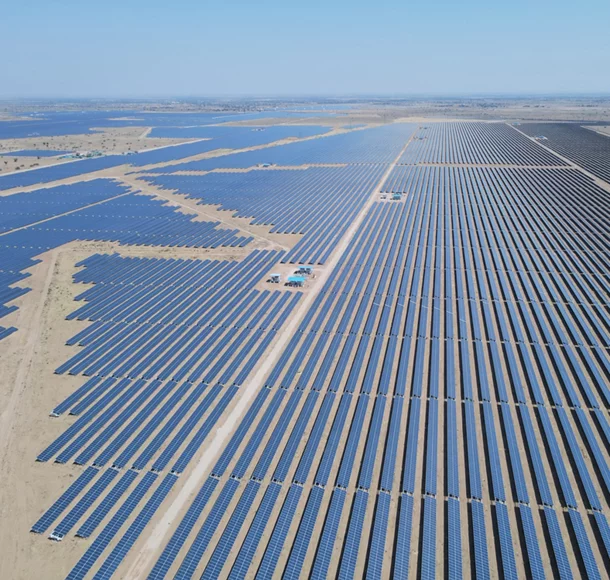
Mahindra Susten (India)
Mahindra Susten is an example of a Climate Solution, supporting India’s energy transition through utility-scale renewable power. In FY2023-2024, the platform reported generating more than 2,300 GWh of renewable energy and has an installed solar capacity 1.55 GWp, with growth ambitions supporting India’s target of 500 GW of non-fossil capacity by 20304. The investment reflects the scale and cost competitiveness of renewables in fast-growing energy markets.
2
Accelerating Credible
Transition Planning
We will continue to work closely with our portfolio companies to develop credible and cost-effective decarbonization plans. This builds on the early progress of our Paris Aligned Reduction Target (PART) program and reflects our belief that active ownership can deliver meaningful resilience and change. By identifying practical steps, setting clear pathways and improving climate governance, we help relevant companies in our portfolio reduce emissions, lower operating costs and strengthen their long-term competitiveness.
Cadillac Fairview (Canada)
Cadillac Fairview (CF) demonstrates Transition Planning in practice across a diversified real estate portfolio through building-level decarbonization technologies (e.g. heat recovery, electrification of hot water, AI-enabled HVAC, and on-site solar). CF has achieved a 25 percent absolute reduction in market-based scope 1 and 2 emissions since 20175. This strategic investment in sustainability reinforces the portfolio’s operational efficiency and long-term asset resilience.
Reporting on our Progress
Transparency and accountability are core to our approach. We will continue to report on portfolio carbon footprint and provide annual disclosure against our CTA target starting with 2026 year-end reporting. We will also report on avoided and reduced emissions through case studies where we have reliable data.
To learn more about how we classify Climate Transition Aligned assets, please see our CTA Taxonomy, which outlines the detailed criteria used across both pillars of the strategy. Our CTA Taxonomy has been reviewed and endorsed by the Climate Bonds Initiative.
Read more about the launch of our 2026-2030 Climate Strategy
What prompted the strategy?
AM: We have long sought to take an engaged and active role in addressing climate change in how we invest and manage our portfolio. Reaching our 2025 emissions-intensity reduction target a year early gave us a natural point to step back and reassess where we can make the greatest impact, both for our business and for the broader global decarbonization effort. The result of that reassessment is our 2026-2030 climate strategy, which we believe can help us protect and grow value, build a more climate-resilient portfolio, and create measurable real-world impact.
How did you go about defining “Climate Transition Aligned” assets and to what extent does your strategy link to longstanding areas of focus like your PART (Paris-aligned reduction targets) program?
AM: Our CTA definitions are built based on internationally recognized climate frameworks (as outlined in our CTA Taxonomy). Our CTA target replaces our prior emissions intensity target, and we will continue to report on our carbon footprint.
Many elements of our prior approach are intentionally integrated into the pillars of the revised strategy to create a simpler, more coherent framework that focuses on execution and real-world outcomes. For example, our PART efforts fall under Transition Planning, and our green investment ambition falls under Climate Solutions.
Where do you see the biggest opportunities?
AM: The underlying economics remain strong even if the pace varies across sectors and geographies. Technologies that deliver cheaper, more efficient energy systems like renewables, battery storage, electrified transport and heating, and the infrastructure and minerals that support them, will continue to gain market share because they are expected to outcompete legacy systems over time. These are the areas with the strongest long-term tailwinds. They are essential to meeting rising global energy demand and represent the most durable opportunities for long-term investors.
How do you think about investments in higher emitting sectors, including fossil fuels?
AM: We take a pragmatic view. While we believe the energy transition is inevitable, today’s global energy system still relies heavily on fossil fuels, and we expect that will remain true for some time6.
With this in mind, we may invest in higher-emitting sectors, including fossil fuels, where we see strong commercial fundamentals and a clear understanding of transition risks. Some of these investments could potentially be eligible under our CTA framework if they meet our stringent definitions.
Our focus is on being clear-eyed about the role these assets play in the broader energy system context, the pace of change in different markets, and how we identify and manage the associated transition risks over time. We will also continue to focus on decarbonization in the portfolio as a key element of our strategy.
What makes you optimistic about what lies ahead?
AM: As a long-term investor, we are optimistic that energy transitions economics are strong. Even in the face of short-term varied policy momentum and sentiment shifts. Despite geographic and market nuance, we are consistently seeing growth in areas like renewables, electrification and grid technologies given their lowest-cost profiles.
I am also encouraged that we are seeing a clearer understanding of the practical role asset owners can play. For a long-term investor like Ontario Teachers’, it is about being pragmatic, supporting real-economy progress where we have influence. Pair that with ongoing innovation and the capital now flowing into these sectors and it gives me confidence that progress will continue, and we will be a part of it.
1 “Ontario Teachers’ announces positive 2024 results,” March 20, 2025. https://www.otpp.com/en-ca/about-us/news-and-insights/2025/ontario-teachers-announces-positive-2024-results/.
2 “Global Investment in the Energy Transition Exceeded $2 Trillion for the First Time in 2024, According to BloombergNEF Report,” January 30, 2025, https://about.bnef.com/insights/finance/global-investment-in-the-energy-transition-exceeded-2-trillion-for-the-first-time-in-2024-according-to-bloombergnef-report/.
3 As at June 30, 2025, Ontario Teachers' had an estimated $35 Billion in the Paris Aligned Reduction Target
and Green Assets programs, which is being used as a proxy for our CTA assets.
4 Mahindra Susten, Sustainability Report 2024, p. 6 https://www.mahindrasusten.com/sites/default/files/2025-02/31_1_Finalized%28Press%20Quality%29_compressed.pdf, https://www.mahindra.com/sites/default/files/2025-07/Mahindra-and-Mahindra-Sustainability-Report-2025.pdf.
5 Cadillac Fairview 2025 ESG Report: Progress Through Purpose, 2025, p.7. https://assets.cadillacfairview.com/m/39e41860e111d5c1/original/2025-CF-ESG-Report-V7-1-optimized-final.pdf.
6 International Energy Association (2025), World Energy Outlook 2025, IEA, Paris https://www.iea.org/reports/world-energy-outlook-2025.