Behind the deal with Jim Sikora: Metals and Mining Royalties
Insights on the value that mining royalties provide to Ontario Teachers’ and the opportunity set in Canada and globally.
At a glance
- Metals and mining royalties contribute to Ontario Teachers’ all-weather portfolio, provide a hedge against inflation, and add value through strong returns
- The Natural Resources team is looking for exposure to precious metals, base metals, battery metals, and industrial minerals – a diversified portfolio with strong demand tailwinds
- With Canada’s resource wealth, the mining team is spending time exploring opportunities at home

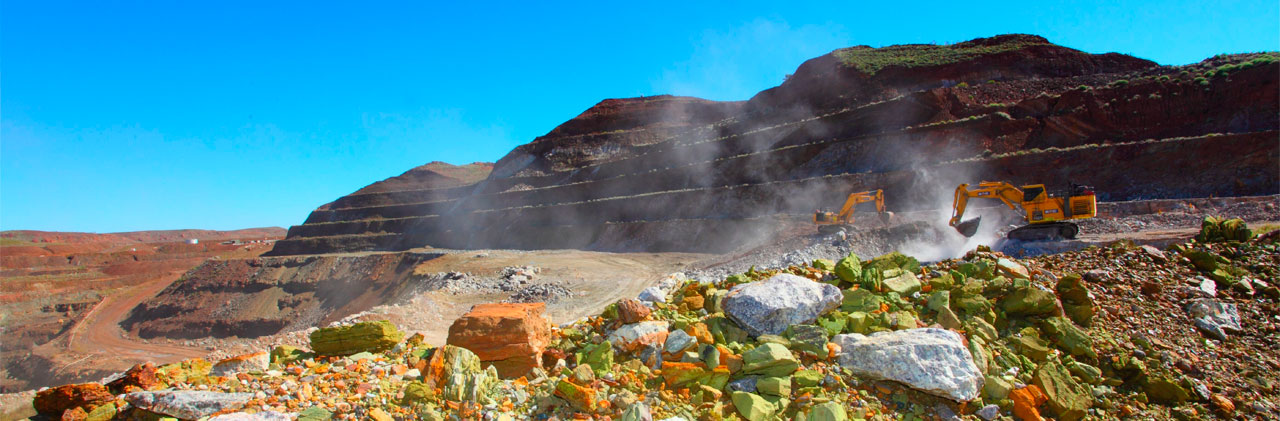
Over the last decade, leading global institutional investors have been increasingly turning to metals and mining royalties as a form of diversification for institutional portfolios that provides steady, commodity-linked cash flows.
Recently, the Ontario Teachers’ Natural Resources team announced the acquisition of a portfolio of royalties on critical minerals in Western Australia including lithium, tin, and tantalum.
We sat down with Jim Sikora, Managing Director, Natural Resources, to discuss why Ontario Teachers’ looks at these types of transactions, how they fit within the broader portfolio strategy, and other markets that the team is exploring.
Q: To start off with the recent transaction, why do we look to invest in mining royalties?
We started this program approximately eight years ago. It has been quite successful for Teachers’ – we have generated strong returns over that time, exceeding our benchmarks and it’s a priority area for further investment.
The idea behind looking at mining royalties came about as a way to diversify our natural resources portfolio, which at the time was heavily weighted to energy, and have these assets play a larger role in the Teachers’ all-weather portfolio.
With royalties, in periods of rising commodity prices – whether that’s due to robust economic growth or even supply disruptions – they will typically deliver increasing cash flows. At the same time, if the economy is weaker, the long-term nature of these assets and their ongoing top line revenue streams can provide stability. This makes royalties effective diversifiers, inflation hedges and a good match for a pension plan with inflation-linked liabilities that needs a balance of assets able to perform in any environment.
For our portfolio, there are four classes of metals that we are actively looking for exposure to: precious metals (e.g., gold and silver), base metals (e.g., copper and nickel), battery metals (e.g., lithium), and industrial minerals (e.g., salt, soda ash).
Q: How has the approach to these types of transactions evolved over time?
Royalty structures are attractive to global investors because of the diversification that they offer as well as the potential for cash flow growth if a producing mine expands its resources. This upside optionality is largely why, from when we started our program to now, we have seen the competitiveness rise for these types of transactions.
To comment on our own strategy, we have evolved our approach over time. And what we have been looking for and focused on is finding a path that can earn us a strong return, manage downside risks, and retain commodity exposure all while meeting the financing needs of the operator more efficiently. In our recent Australian transaction, it was entirely a royalty package, but it doesn’t need to be for us to meet our goals. We are also comfortable providing credit and taking an equity position in a company in addition to buying a royalty. By taking on a bit more operational and financial exposure upfront, for example, we were able to position ourselves for a potentially greater overall return once the royalty kicks in. Offering a cross-capital structure solution for an operator is a great way to gain access and differentiate ourselves versus being in a crowded auction and competing solely on price.
Q: Does the Australian transaction represent a one-off opportunity or is it part of a broader strategy to increase exposure to critical minerals as these markets mature and global competition for supply intensifies?
Our latest transaction in Australia was quite unique as it provided us with a diversified metals portfolio. Generally, you’re gaining exposure to a single commodity but, in our case, we have taken on a package of critical minerals with some producing mines and some in earlier stages.
As we think about where we are expecting to see strong demand over the long term, lithium is a commodity that certainly comes to mind. We see automotive companies, technology firms, governments, and other investors all recognizing how vital lithium and other battery materials are and looking to secure future supply. Having a strategy that lets us tap into critical minerals where we see good long-term fundamentals will provide strong upside.
Q: What markets are we currently exploring for similar transactions?
If I think about our exposure to date, we have largely been transacting in the U.S., Australia, and here at home as well. Our team has been exploring opportunities in South America too—we are looking across both developed and select emerging markets. We focus on areas where the combination of resource quality, governance, and our local partners give us confidence that the investment will be sound over the long term.
The North American story is encouraging. We have been seeing a push south of the border and in Canada on supporting critical mineral development. On the Canadian side specifically, the team is spending a lot of time exploring potential opportunities. Canada is a resource rich country and has significant mineral wealth. While we need to ensure that any deal offers the right risk profile, we are encouraged by what we are seeing as governments move to de-risk projects. Historically, Canada has also been an attractive market for generating returns. We are optimistic that we will have more to talk about in Canada soon.
To get in touch about opportunities, please contact us at Metals@otpp.com.


