Thoughts on a changing global order from Janice Stein, a leading expert in global affairs
Global affairs expert Janice Stein joins Ontario Teachers’ Chief Strategy Officer, Jonathan Hausman to discuss a changing global order, the accelerating impact of AI and what both mean for institutions and leaders looking ahead.
The global order that has shaped much of the past 75 years is changing at the same time as advances in AI are reshaping economies, institutions and global competition.
In this episode of School of Thought, Ontario Teachers’ Chief Strategy Officer Jonathan Hausman speaks with global affairs and international relations expert Janice Stein about how these forces are intersecting and what they could mean for leaders and institutions. Their conversation explores U.S.–China competition, the changing meaning of sovereignty, the opportunities presented by AI, and how organizations can position themselves for what comes next.
Stein brings decades of experience studying international relations, conflict and decision-making. She is the founding director of the Munk School of Global Affairs & Public Policy, Chair of the Halifax International Security Forum, a Fellow of the Royal Society of Canada, and an Officer of the Order of Canada and the Order of Ontario.
The conversation also considers what effective leadership looks like in periods of significant change, how new approaches can help institutions adapt, and where Stein sees opportunities for innovation, growth and positive transformation in an evolving global environment.
Listen & Subscribe
.svg.png)


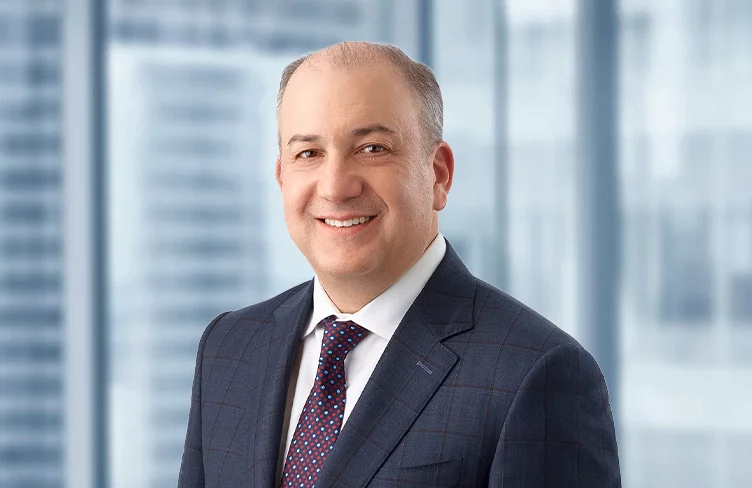
Jonathan Hausman
Chief Strategy Officer, OTPP

Janice Stein
Founding Director, Munk School of Global Affairs & Public Policy, University of Toronto
-
Jonathan Hausman is the Chief Strategy Officer at Ontario Teachers’. In this role, he oversees strategy development and implementation across Ontario Teachers’, leading a cross-organizational approach to advancing the strategic objectives of the Plan.
Jonathan oversees the Global Strategy, Sustainable Investing, Government & Public Affairs, and Marketing & Communications teams. These teams act as a strategy and stakeholder relations centre of expertise, through advancing Ontario Teachers’ understanding of, and strategic responses to, critical themes for the Plan, and cultivating its relationship across a wide range of stakeholders.
Previously, he was the head of Alternative Investments and Global Tactical Asset Allocation, where he was responsible for the Fund's global hedge fund portfolio, as well as its internal global macro and systematic trading strategies.
Prior to joining Ontario Teachers', Jonathan was Executive Director at Goldman Sachs, where he managed sovereign risk strategy and advised governments in its New York, Hong Kong and London offices. He is the Chair of the Canadian Council for the Americas and is a Distinguished Fellow at the Munk School of Global Affairs at the University of Toronto, where he lectures on global political economy. He also serves on the board of Capitalize for Kids. Before entering investment banking, Jonathan worked as Special Assistant to the Premier of Ontario.
Jonathan holds a BA (Hons.) from McGill University, an MSc. (Econ.) from the London School of Economics, and an MPA from the School of International and Public Affairs at Columbia University. He also has the ICD.D certification from the Institute of Corporate Directors.
-
Renowned as one of Canada’s most respected national and international experts on world politics, Janice Gross Stein is the Belzberg Professor of Conflict Management and the founding Director of the Munk School of Global Affairs at the University of Toronto. She is a Fellow of the Royal Society of Canada and a member of the Order of Canada and the Order of Ontario. She is an Honorary Foreign Member of the American Academy of Arts and Sciences.
She was the Massey Lecturer in 2001 and an inaugural Trudeau Fellow. She was awarded the Molson Prize by the Canada Council for an outstanding contribution by a social scientist to public debate. She has been awarded Honorary Doctorate of Laws by five universities around the world. In 1996, Stein became a University Professor, the highest honour the university accords its faculty.
Her research sits at the intersection of cognitive science, psychology, and international politics as she focuses on decision making and strategy. The author of eight books and more than a hundred articles, her most recent work is on the management of escalation and the psychological, institutional, and political factors that explain surprise. Her latest research focuses on the intersection of geopolitics and technology.
Podcast Disclaimer
The information provided in this podcast is for general informational purposes only and is not intended to address any individual circumstances. The information does not constitute any form of recommendation, representation, endorsement, or approval, nor does it constitute an offer to sell or a solicitation of an offer to purchase any investment, fund, or other product or service.
It is also not intended to provide, or be a substitute for, any form of advice (financial, legal, investment, tax, or otherwise) and should not be relied upon as a basis for making, or refraining from making, any specific investment or other decision. Listeners are encouraged to seek independent professional advice where appropriate.
OTPP makes no representations or warranties regarding the accuracy, completeness, timeliness, or applicability of the content. Any reliance on the information provided is at the listener’s own risk.
The views and opinions expressed by guest speakers are their own as of the date of publications and may not reflect those of OTPP. Guests may have positions in the investments or topics discussed.
For more information about the Ontario Teachers’ Pension Plan, please refer to www.otpp.com.
-
Jonathan Hausman: Hi, I'm Jonathan Hausman, Chief Strategy Officer at Ontario Teachers’, and I am so pleased to be speaking with the one and only Janice Stein. You’ll have to forgive me, Janice, because I’m going to read a little bit, which I don’t normally do. Given the span of your career and contributions, I want to get it right. So, you are a leading scholar of international relations and decision-making and, truly, one of the public intellectuals of Canada. You're the founder of the Munk School of Global Affairs and Public Policy and you’ve received two of the highest honours you can get in Canada: Officer of the Order of Canada and the Order of Ontario. For people outside of Canada, I think they will know you as chair of the Halifax International Security Forum, which is a major defence forum in the world. This is a topic top of mind for business and government and very germane to our discussion today. You’ve influenced generations of leaders here in Canada and abroad. And personally, you recruited me to be co-chair of the Munk School, and I learned very early on that if Janice Stein asks you to do something, you do it. But I’m very glad that I did. So, there are very few people who are better positioned, I think, to talk about the world as it is today, but more importantly, to talk about how leaders should be navigating it. Before we get started, I wanted to ask you about your background and what really led you to become an expert in global affairs and, if I can, get your origin story.
Janice Stein: Well, Jonathan, I was born in Montreal, actually during the war, in the closing years of World War II, and grew up in a family where my mother was admitted to McGill Law School under two quotas. She was Jewish, and so there was a Jewish quota and she was a woman. She was in the first entering class of women in law school. So, my sister and I, when we became aware that somehow she was a little different from the other mothers, the question was, well, what difference are you going to make in the world? There was no option but to do that. When I was about five — and this memory is still so vivid for me — I saw this big black headline on the Montreal Gazette, and it said, Korea Goes to War. And I went to my mother and I said, why are they doing that? You tell us all the time, you don't fight in the schoolyard. So why? Why would countries do this? It seemed stupid, right? It's not a good use of resources to do this. And she said, we don't have a good answer for that question. From then on, believe it or not, I was fascinated and read anything I could. And we still don't have good answers to that question. Jonathan.
Jonathan Hausman: Well, taking that forward, let's talk about the world as we find it today. What do you find most worrisome about the world as you see it, as well as maybe things that give you some hope?
Janice Stein: We are living in unprecedented times, and I don't say that loosely, because we can all say that about each period that we go through. Having lived through a series of really important structural changes from the late ’40s until now, I can say this is unprecedented because we have two deep trends that are converging on creating challenges of an entirely different order of magnitude for leaders. The first of these is a breakdown of the international order that was born in ’48, ‘49. We tinkered with it and changed some of it, but the fundamental structure remained. Frankly, in plain English, it's gone and it is not coming back. The Prime Minister was absolutely right about that in his speech in Davos. It's gone. And many of our leaders across all our sectors are really having a lot of difficulty dealing with that. There was a really interesting piece written by a journalist. He said that in the heart of every Canadian there are two. One Jonathan gets up in the morning and says the world is really different and what do I need to do to get ready for it? And the other Jonathan gets out of bed a minute later and says, boy, I just hope this is temporary and it will reverse itself, you know? And where most people go is when the next US presidential election happens.
Janice Stein: That’s the first: we are in very different times. Layer on top of that the fact that we have the most revolutionary technology moving at a pace that I've never seen. What’s so revolutionary about this? Think about it. For millennia, we’ve automated physical work, right? The first person who got an axe in their hand could do all kinds of things they couldn’t do before. So, we've automated physical labour. We've never automated cognition. And we are at the beginning of a period where we are automating cognition. The pace is astonishing. I can't find the right words to describe this pace, and it is so revolutionary that people are having trouble wrapping their heads around that. So layer one on top of the other: structures are crumbling, and we have a technology that is ripping ahead at an unbelievable pace.
Jonathan Hausman: The obvious question, I guess, is: we are a society of institutions, right? Institutions and the frameworks that surround them are supposed to manage change. So, are you saying that the institutions have failed or have not yet been built? What is your perspective on that?
Janice Stein: I'm going to be blunt. Institutions always lag behind the forces that are really pushing change. For me, the question is: how big is the lag? I think the institutions we have, by and large, are not fit for purpose, and that's a serious claim to make. Most of our institutions are not fit for purpose, and they're going to fade into irrelevance. The challenge is that we have an institutional vacuum, and then we layer technology on top of that. Technology never really has an impact on its own. It’s not an “it,” right? It only acts through institutions, through the way leading institutions adopt it and push forward. We could talk about different futures. Here's one, Jonathan. The institutional leaders who get it — those institutions are going to adapt at a really fast pace, faster than they've ever done in their institutional memory — and the gap between them and those who believe we can just manage through this, a little change here, a little change there. That gap is going to grow, and we will have a bigger gap between those who get it and understand and are reshaping their institutions and those who are just trying to manage through it.
Jonathan Hausman: So, let's place a political lens on this. Not only are there winners and losers among institutions, there are winners and losers in society.
Janice Stein: Yes.
Jonathan Hausman: And that creates its own set of outcomes that are difficult to manage. Can you comment a little bit on that? Look, there's a lot of ink that has been spilled about the growing inequality and that this would accelerate that. But there are also political consequences to that. How do you see that playing out?
Janice Stein: You know, let's just talk about two. There are myriad consequences, and we could spend days talking about them. Let's really just talk about two. One is that democracy has historically depended on a broad middle class. This version of democracy that we have is very recent — really the last 75 to 100 years. And it has always depended on a growing middle class. That's a harder thing to foresee as we get those who are really leaning into change now and driving forward and owning it, but a much larger group that are not, frankly, which is what I see. And therefore, we're going to have a less equal distribution, and it's going to be tougher on democracies to navigate through that one, which is not a good political future. That's one political lens. The second political lens on this is those countries that have at least a critical mass of institutions that are driving ahead are going to do much better, right? They just are.
Jonathan Hausman: Right.
Janice Stein: So, we're going to see a reordering.
Jonathan Hausman: We’ve talked about the domestic political implications. Let's talk about the geopolitical dimension. Not to be too academic, but, you know, there is this notion of a Thucydides trap that, you know, that, of course, both China and the United States rather like that idea because it makes them feel like they're in control. But is that the way to think about the world as it is playing out? And also, what's the role of this AI technology in the evolution of that global competition?
Janice Stein: Graham Allison wrote a book called The Thucydides Trap. When I saw him, I told him, “You are wrong.” That’s about a rising challenger threatening the top power, which then tries to constrain the challenger, and they go to war. Frankly, any scenario in which the United States and China go to war is catastrophic for everybody. Everybody loses, given the kinds of weaponry we have. I really believe it’s off the table. I don't believe that there's any conceivable Chinese leader or American leader who will do it. So what has happened? The site of competition is who’s ahead in technology. And the technology that we're all talking about right now is AI, although quantum is right behind it, and we shouldn’t forget about it.
Jonathan Hausman: And one charges the other.
Janice Stein: And one charges the other. They're interconnected. It’s a game changer too. I think that's the wrong way to ask the question. Here’s how I would do it. How is China coping with the AI revolution? What’s happening inside Chinese institutions, and how is the United States coping? I think both of them are struggling, believe it or not. That's not the story we hear out there. Why are the Chinese struggling? They’re very adaptive. They have a very highly educated class of scientists and some very adept businesspeople. as you know. They are taking AI models, including OpenAI and Anthropic models, and buying them, which they're allowed to do with some exceptions, and they're adapting them and they're releasing these into the marketplaces as open models. So, what do I see? Two things. One, most of the world is going to build their infrastructure on top of Chinese models. It's cheaper. It has to do with the price of what they call a token. Right? That’s not trivial when you build on top of Chinese models. The second thing is there are many, many in North America, in the United States and Canada who are choosing Chinese models right now, because the price of the most advanced frontier models is too great.
Janice Stein: That’s a big win for China. It just is. Again, we could go down that path, but let’s not. Let's talk about one more thing inside China. China has the most sophisticated surveillance state of anybody in the world. But what happens when you release open-source models? If I’m sitting at home and I can run this model on my phone, and all of a sudden, I can go anywhere. And frankly, that's what we're seeing, that these AI models are breaking out and taking you places they supposedly can’t go. There's a lot of fear in the Chinese elite because, for them, regime survival is everything. They're not going to put that at risk by empowering consumers. So there are some serious institutional blockages ahead. What’s the United States doing? You can see my shoulders slump. Is the United States leveraging its advantages? It is such a technologically innovative society, but is it connecting its technological advantages, advanced manufacturing and energy resources? Is it building out its allies so that it multiplies the resources it has as we go through this change?
Jonathan Hausman: I’m glad you mentioned the global system and the alliances that we grew up thinking were immutable and forever. You made the point that they may not be, and that we are in a rupture, as the Prime Minister iterated back in January. But I guess the question is this concept of sovereignty. So we've drawn the lines in sovereignty in a certain way for a very long time based on a Pax Americana, if you will. So, we relied on other folks for a whole bunch of things. Security, for technology, it was openly available and for trade.
Janice Stein: And growth.
Jonathan Hausman: Exactly. So where do you think the line is now being drawn in terms of sovereignty when countries are looking to maintain or actually take strategic control over energy, defense, technology, because they feel like they can't rely on their hitherto allies and that they don't want to get essentially squashed in this melee.
Janice Stein: You know, this is the question of the day, really. Let me go a little further back than Pax Americana. Let's go back to 1648. How do we define sovereignty? Right. Because that’s the modern version. We said a sovereign country controls its borders and exercises a monopoly of force. Well, that doesn't cut it in 2026. So, we did a project, and actually, I'm proud to say that Teachers’ was part of that project, which was great, in which we said, well, what does sovereignty mean today? And we redefined it as freedom from coercion. So, it is not about building walls. It's about choosing partners that are not going to coerce you when the chips are literally down.
Jonathan Hausman: The chips are down.
Janice Stein: When the chips are down, right? And so we looked at this and we said, what really matters to Canadians? It’s not simply where their data sits, because that doesn't tell you a lot because your data can stay in Canada, but it can be on a server, where, for instance, here's a hypothetical, it sits on a big server by one of the big cloud providers. The United States decides to declare a state of emergency, which we've seen happen. And then any president can say that cloud provider, you can't provide updates for that server. So Canadians, French, British and Germans are all asking the same question: what do we need to do to be free of coercion? You can’t build out this kind of infrastructure on your own. The only two countries in the world that can are the United States and China. It is massively expensive, and if you don't do it, you don't scale and you don't innovate. Right. There’s an obvious answer: you partner. So, Canada could partner with Germany. We did. Our largest large language model developer, Cohere, partnered with a company in Germany, and we could extend that out to others, to South Korea. You build a shared cloud because you're not worried that the South Koreans or the Germans are going to be in a position where they could coerce. So, it's a screen now that we can use when we think about what the future of our alliances looks like.
Jonathan Hausman: So, let's take this back to economic actors. Right. What does it require of a leader of a bank or a corporate or an investment house? What does it take to be able to understand those layers, that latticework of new considerations that were probably never considered before? Yes. What is the training? What is the mode, if you will, of leadership today?
Janice Stein: You know, we have to do two things, I think. We have to provide a set of screens for leaders. that were not in place before. So, whether you're a leader in the financial services sector, whether you're a leader in education, which is my sector, it doesn't really matter. You have to ask yourself as you're developing partnerships, because none of us can do this alone. None of us. So, when we're doing this, when we choose partners, how confident are we that our partners will not coerce? Investor protection, which is fundamental in the investment community, is fundamental. If that weakens in any way, you're going to hedge against it to the extent that you're going to look for partners that you're confident will not coerce, and you have robust systems of legal protections for investments. And I think that's a very important screen that was not in place before. And then we go to the opportunities and the usual things that are very, very important to think about.
Jonathan Hausman: So, you talked about opportunity. There are a lot of reports of jailbreaks of models, and they’re true.
Janice Stein: True.
Jonathan Hausman: But it’s also, I guess, a sign that there's incredible upside in terms of the amount of positive change that may take place as a result of these technologies. How do you reconcile a world in which there's a really positive outcome potential and there's also potentially a very poor one?
Janice Stein: Let me talk about your language for just one minute, and I hope our audience bears with me. What's a technical definition of risk? The spread between the possible outcomes. That’s very familiar language to people when they think about risk. Well, we're in that world of maximum risk because you get incredible opportunities as a set of outcomes. Look at AI. I’ve missed the boat, but two generations down, people are going to live to 120 because we're going to see the most dramatic improvement in medicine, rehabilitation and preventive medicine that we've ever seen at a pace that is just unimaginable, to take one example. On the other hand, we're going to see some of the biggest threats to cybersecurity. And yet everything about us is on some machine. I can tell you, Jonathan, there's a file about you everywhere, just like there is.
Jonathan Hausman: I'm sure it's very boring.
Janice Stein: But there is one. And there's a file about me, and my phone was hacked, okay, by a foreign actor two weeks ago. So, our data is what is fueling this incredible revolution, but it's very, very vulnerable. And there’s a trade-off there that we are just beginning to think through. So again, let’s talk about what the education and business sectors have to do. You're going to have to make massive investments in cybersecurity in a way that you can't even think about right now. It is coming at you and you know it'll come.
Jonathan Hausman: Mythos is just the beginning.
Janice Stein: It's only the early stages of the story. The Mythos story illustrates all these points. With Mythos, Anthropic decides, “This is scary. I’m not releasing it,” goes to the U.S. government, then shares it with leading institutions — but only in one country, the United States. And there's a lag before it is shared with parallel institutions in Canada or the United Kingdom. Think about the advantage. Institutions in Canada, United Kingdom, France were living in the dark, frankly, about the cybersecurity threats that they had to deal with. That is not a good world. We have to hedge against that. That's number one. Right? Number two, you then have to think about the systems that you build. So, you get layers of protection, right? Your core data, your national security data — we’ve got to put it behind firewalls that are so impenetrable that it will take more effort to hack through those, and it will give us just enough warning that they're at risk. So, I don't think this is on the radar screen of many of our leaders. It's very expensive to do. People are worrying about future jobs. Let me tell you a really good field to go into right now: cyber. Everybody’s going to be hiring. And those cyber experts are not the cyber experts of five years ago. They are cyber experts who are at the cutting edge of AI because we're going to use AI against AI. That's where we're going.
Janice Stein: If you ask me what’s going to cause AI to disrupt financial institutions in a way that makes 2007–2009 look like a momentary hiccup, I can’t give you a probability estimate of that. I’m going to say: tell me the stories of how it could get there. But that’s a team-based exercise. It's a team sport. You probably need a red team and a blue team. It makes clear why leadership is everything over the next 20 years. It's absolutely everything.
Jonathan Hausman: So, where do those leaders come from? I mean, are they being produced today? Are those leaders actually trained in an entirely different way than leaders who led before? You mentioned the 2008 crisis. In a number of cases, the leaders of those financial institutions did not understand the machines, the products, the dynamics and the marketplace that led to the meltdown. Are we in a similar situation today? How do we remedy it?
Janice Stein: We are. I think we are. How much time do we have? I don’t know. But it is absolutely crucial. So how do we remedy it? It’s got to come, frankly, from the C-suites of large institutions, not only financial institutions. Our government has to start doing this in a very serious way. And it is about taking some time away from the office with the senior teams. and starting to ask, “How can you imagine disruption happening?” and forcing that onto the agenda because people don't want to think about disruptions. Universities have to do this. We cannot continue as we are with incremental change and adjusting around the edges. And so, who are the winners in the world we're moving into? The institutions that seriously invest in understanding disruptive change and building it into the cycle of leadership. I think that's absolutely critical. I’m leaving my job and a new director is coming in. He’s a wonderful person, and I’m really excited. But I said to him, you need to look at what we're doing here. How fit are we for disruptive change? And he said, yeah, and what skills do people need in a period of disruptive change? That's the right question. If we're lucky, we might overinvest a little bit in that. But if we're not lucky, that is the best single hedging investment we can make right now.
Jonathan Hausman: Well, coming up soon, as you know, leaders who are in positions to make those kinds of choices are all coming to Toronto. Yes. For the Canada Investment Summit.
Janice Stein: Yes.
Jonathan Hausman: What are your thoughts about what investors should be thinking about when they come here to Canada?
Janice Stein: Look, I think it's a great question. This is a moment for Canada. We are fortunate and I say this not in a partisan way — to have a Prime Minister who gets the disruption, who understands that we have been shoved out of the trajectory that we were on, and we have to chart a new course. So, what resources do we bring to the table? I think everybody knows that Canada is endowed with an incredible number of natural resources, which, as it happens, are a critical part of the AI revolution because without energy, you're disadvantaged in AI. When investors come here, take a look at the opportunities. Not a one-year or two-year look. Take a look at the investment opportunities because they are more important now than they've ever been. Do we have to do more, Jonathan, on clearing a path to make this happen faster? Yes. Are we doing some of that institutional re-engineering already? Yes. We have to do more, which fits my theme of institutional re-engineering. The second thing we have, and I don’t underestimate it, is a rule-of-law society.
Janice Stein: It matters to investors. Investor protection matters. You can take your money out as well as put it in. And in a world of uncertainty, that is a very, very valuable asset. Thirdly, the country is moving to deepen its partnerships, and those partners are going to have privileged access. That's what a partnership means. What’s the term sheet? And here investors can play a very large role now because it’s early in the process of writing the term sheets. Do you want to get in on the ground floor? I would, in this country, because it offers these kinds of opportunities, not only in this country, but it offers opportunities in the countries that we judge will not coerce us. It’s an entry not only into the Canadian market, but into other markets as well. Finally, we have a very educated workforce, as everybody knows. Put those things together: This is just a great moment to come to Canada. I'm very glad everyone's coming.
Jonathan Hausman: So, it's very easy to construct a negative scenario these days. There’s a lot of disruption and uncertainty. But what are the things that really make you hopeful?
Janice Stein: There's a lot that makes me hopeful, Jonathan. Disruption is an empowering process. I think you and I would both say there are lots of institutions that have not pushed themselves hard enough. There's institutional inertia out there. In my world, there is a lot of bureaucracy that keeps doing things the way they've always done it, because they've always done it that way. That is not going to be okay. So there are huge opportunities for growth and for positive change as we clear out the obstacles. We will not have the feeling of battering our head against an immovable wall. There will be a lot of creative opportunities.
Jonathan Hausman: That's a good note to end on. Thank you very much, Janice. Thank you for talking with us today.
Janice Stein: What a pleasure to be with Teachers’, which does a great job educating leaders for the future.
Jonathan Hausman: Thank you, Janice, and thank you very much for watching today. And we'll see you next time.